Few spices are as widely used as coriander, and India is among the world's leading sources of its seeds. For spice packers, masala makers and food manufacturers, choosing the right Coriander Seeds exporter from India affects flavour, colour and shelf life in every batch. This article explains how to judge grade, aroma and cleanliness before you buy.
Why India Is a Leading Source of Coriander
Coriander, called dhania in India, is grown across Rajasthan, Madhya Pradesh and Gujarat, and the Saurashtra region around Rajkot is well known for its spice trading. Wide cultivation, strong domestic demand and long experience in post-harvest handling give Indian coriander a reliable supply base. Importers use the seed whole, split or ground in curry powders, pickling mixes, sausages, bakery products, beverages and ready meals, so consistent quality matters at every stage.
Understanding Coriander Grades and Quality Names
In the Indian market, trade names such as Eagle, Scooter and Badami are commonly used to describe quality levels, and the definitions can differ slightly from one trader to another. Grades usually reflect seed colour, size, purity and aroma. Because names are not standardised across the industry, never rely on a label alone. Insist on a physical sample, compare it with your own standard, and write the key parameters into the purchase contract. This protects you from surprises and gives your supplier a clear target.
Aroma, Volatile Oil and Colour
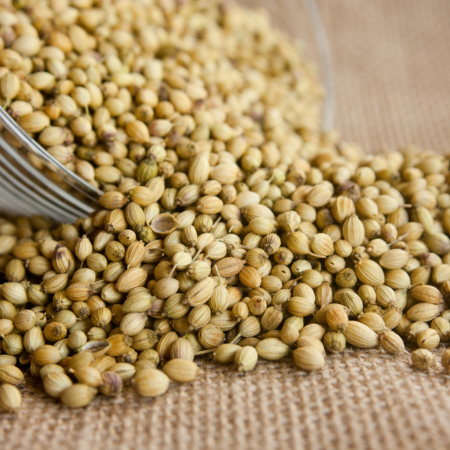
Coriander is bought for its warm, citrusy aroma, and that aroma comes from volatile oil stored inside the seed. Freshly harvested seed that has been dried and stored correctly keeps more of this oil, while old or badly stored seed turns dull and flat. Colour is the first visual clue: good seed shows a light green to golden-yellow tone, whereas brown or faded seed often indicates age or poor drying. Buyers who need a specific volatile oil level should state it in the specification so the supplier can select suitable lots.
Specifications to Include in Your Purchase Offer
To compare offers fairly, ask every supplier to quote against the same written parameters:
- Moisture: normally kept at roughly 9 to 10 percent maximum to protect aroma and prevent mould.
- Purity: low levels of stems, dust, stones and other foreign matter.
- Colour: uniform light green to golden-yellow seed, free from dark or discoloured grains.
- Broken and split seeds: a clearly stated maximum percentage for whole-seed grades.
- Microbiological safety: salmonella-free product, with steam sterilisation available when required.
Cleaning, Sterilisation and Food Safety
Spices are sensitive products, and many importing countries apply strict hygiene checks. A good exporter therefore combines mechanical cleaning, sieving and gravity separation with metal detection and, where requested, steam sterilisation. Clean processing floors, closed storage and traceable lot numbers further reduce risk. When you order from us, you can request a sample drawn from the same lot as your shipment, so the quality you approve is exactly the quality that is loaded.
Packing, Container Loading and Port Choices
Coriander seed is light and bulky, so a container holds fewer metric tons than it would with heavy grains such as millets or pulses. A 20 ft container usually carries between 10 and 13 metric tons depending on bag type and loading method. Seed is packed in 25 kg or 50 kg PP or jute bags, and private labelling is available. From Rajkot, containers move by road to Mundra or Kandla. Dry containers, proper lining and moisture control are essential, because spices absorb humidity quickly during sea transit.
Storage and Shelf Life at Destination
Whole coriander keeps its aroma far better than ground coriander, which is why many manufacturers import whole seed and grind it just before use. Store bags in a cool, dry and well-ventilated warehouse, away from strong smells and direct sunlight, since spices easily pick up odours from nearby goods. Use older stock first, keep records of lot numbers and check regularly for moisture or insects. With sensible storage, whole seed can hold its flavour for many months and give you better control of your production planning.
What Influences Coriander Prices
Coriander prices move with the size of the harvest, rainfall during the growing season, export demand and domestic demand for masala. Freight rates and currency movements add further changes. Buyers who plan ahead, compare offers across the season and agree on clear delivery windows can manage these swings better than those who purchase only when stocks run low. Ask your supplier for honest market updates, as this helps you decide when to place larger orders.
How to Pick a Coriander Seeds Exporter from India
Look for transparency before price. A dependable Coriander Seeds exporter from India shares samples, explains grade definitions, quotes on clear shipping terms and supports you with complete documents such as the phytosanitary certificate, certificate of origin and any required test reports. Check how the supplier handles complaints, whether it can supply repeat quantities and whether lots are traceable. These signs show that the company treats spices as a long-term business rather than a quick sale.
Order Coriander Seeds from Shalibhadra Export Ventures
Shalibhadra Export Ventures supplies carefully cleaned whole coriander seed from Rajkot, Gujarat, with flexible packing and professional export documentation. If you are comparing a Coriander Seeds exporter from India for your spice brand or manufacturing unit, share your preferred grade, quantity and destination port through the inquiry form. Our export manager will return with samples, specifications and a competitive quotation.
Quick Export Fact Sheet:
| HS Code | 0909.21 (Coriander seeds, neither crushed nor ground) |
|---|---|
| Top Markets | UAE, Saudi Arabia, Malaysia, Europe, UK, USA |
| Loadability | Approx. 10-13 Metric Tons (per 20ft FCL, light bulky seed) |
| Bagging | 25kg / 50kg PP or Jute Bags |